

For Darryl Pierrynowski, a 25‑year connection to Ronald McDonald House Charities (RMHC) didn’t begin in a boardroom, but in a hospital hallway.
When his first son, Ben, spent his first week of life in the Neonatal Intensive Care Unit (NICU), Darryl quickly learned how hard it was for parents to stay close in a system not designed with families in mind. At the time, there were no spaces for parents to sleep in hospital. He remembers doing whatever he could to remain nearby—and realizing how much harder the experience must be for families facing longer travel or more complex stays.
“That was mild compared to what many families go through,” Darryl reflects. “But it showed me how difficult it is when you’re trying to be there for your child and there’s nowhere to go.”
That experience became the foundation for decades of service with RMHC Atlantic.
Building spaces around families
As a volunteer, he toured Family Rooms across the eastern U.S., then worked with partners to bring the model to Halifax. The result was a national first: Canada’s first RMHC Family Room, located at the IWK Health Centre. That approach has since expanded to over 21 Family Rooms across Canada.
Over more than 15 years serving on the RMHC Atlantic board, Darryl also helped drive the development of the new, modern Ronald McDonald House in Halifax—designed to meet the full reality of family life during long medical journeys.
What has kept him connected, he says, are the families.
“You hear story after story—from people across the Maritimes who needed somewhere close to stay, sometimes for months or years,” he says. “It reinforces how critical proximity is for both care and wellbeing.”

Experiencing RMHC in the moment it’s needed
For Meg Beretta, that support became personal in a very different way.
Meg’s son arrived six weeks early, weighing just 4.5 pounds, and was taken to the NICU minutes after birth.
“It was a whirlwind,” she recalls. “I felt very lucky to be at the IWK, but completely unprepared for suddenly having a tiny baby who needed significant support.”
Meg and her partner spent the next 33 days living in the NICU. The IWK’s rooming‑in model allowed them to stay with their son full‑time—an immense privilege, but also an intense and disorienting way to begin parenthood.
A Place to Pause
Although Meg didn’t need RMHC lodging, the RMHC Family Room became an essential part of her experience—offering laundry, meals, and, just as importantly, short breaks from the intensity of the NICU.
“I was amazed by what the space offered,” she says. “Art activities, outdoor space, and even Kindermusik classes for children staying at the hospital.”
Meg’s mother was a Kindermusik teacher, so one day Meg went simply to observe a class.
“I cried,” she says. “I kept thinking about when my son would be strong enough to do something like that.” Months later, she signed her son up for Kindermusik—with the same instructor—bringing the experience full circle.
“The Family Room feels like a cozy living room,” Meg explains. “Even a few minutes there can be the right balm during a hard day.”
On Halloween, just days before her son’s discharge, they dressed him in a tiny Very Hungry Caterpillar costume and brought him down to trick-or-treat.
“Those small moments of normalcy matter more than you realize,” she says.
Why Proximity Matters
Like Darryl, Meg is clear about the importance of staying close.
“Absolutely everything,” she says. “I can’t imagine being separated from my baby during those vital days.”
For families travelling from across Nova Scotia, Prince Edward Island and New Brunswick to receive care at the IWK, she saw how essential RMHC supports were—especially meals—when costs and stress were already escalating due to travel and time away from work.
When Volunteering Becomes Personal
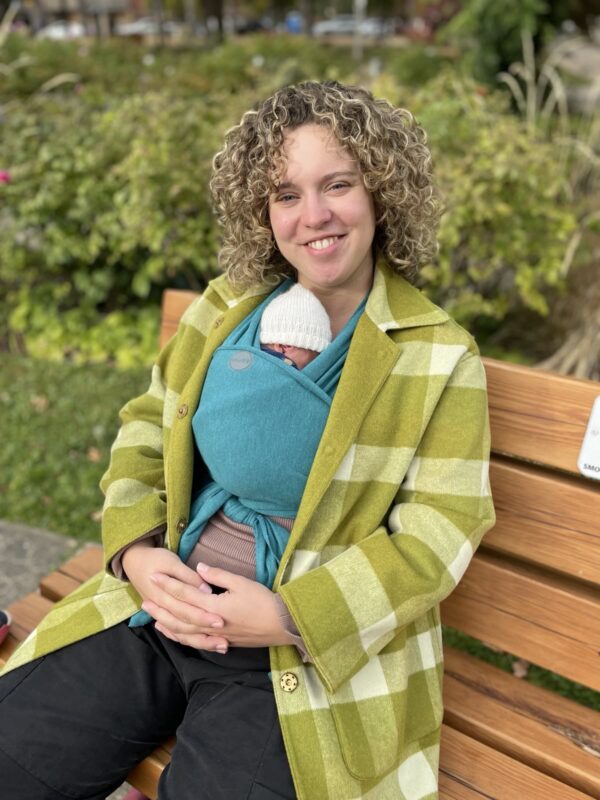
Meg had always known Davis Pier volunteered with RMHC. Experiencing it firsthand gave that knowledge new weight.
Each week, RMHC provided a meal schedule in the NICU, listing which organization prepared the food. “When I saw that, I was overwhelmed,” Meg recalls. “I realized I was directly benefitting from the volunteering our team takes part in.”
Meals are also delivered throughout the week to the RMHC Family Room, so families living full time in the NICU can access them. “Providing meals can sound simple,” Meg says. “But when you’re living day by day in a hospital, every meal helps you get through that day.”
A Shared Commitment
For Darryl, stories like Meg’s reinforce why RMHC’s mission has mattered for decades.
At Davis Pier, that shared understanding has translated into long‑term support—through volunteering, Home for Dinner nights, capital campaign contributions, and sustained partnership.
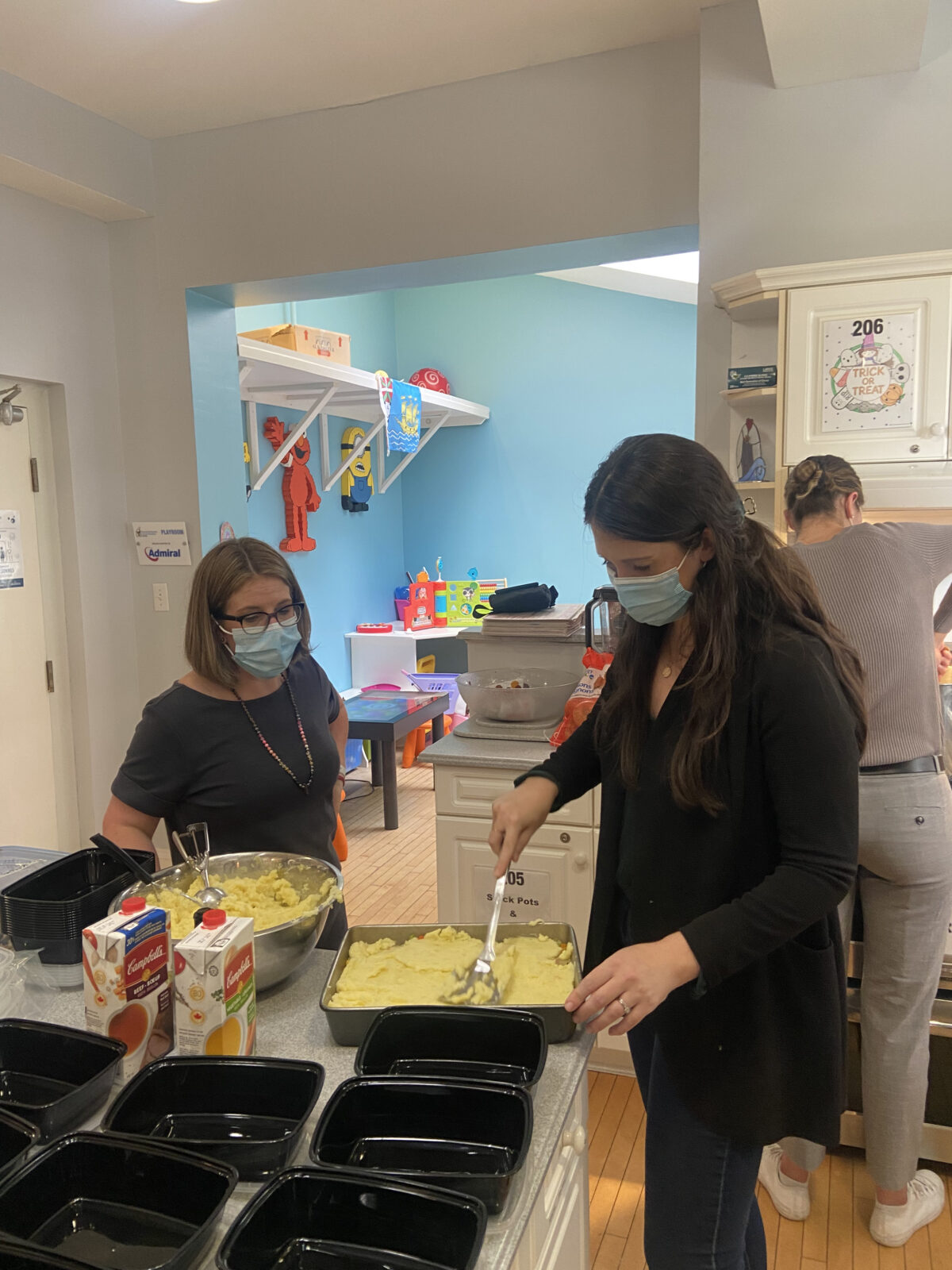

Davis Pier Team at the original Halifax RMH preparing meals for the Home for Dinner nights
“It’s about empathy,” Darryl says, “and using what we have—our time, skills, and resources—to help families through incredibly hard moments.”
Together, Darryl’s leadership and Meg’s lived experience tell one story: When families are supported, children do better. And staying close can make all the difference.