
Our commitment
Equity, Diversity, Inclusion, Reconciliation, and Accessibility at Davis Pier
At Davis Pier, we are committed to Equity, Diversity, Inclusion, Reconciliation, and Accessibility (EDIRA). We strive to reflect this commitment in a workplace where people are free to be their whole selves, where we can embrace and celebrate our differences. This is the same ethos we bring to our clients and our volunteer work, showing up with respect for the diverse communities where we live and work.
It is our responsibility to deeply understand, confront, and dismantle barriers to EDIRA. And we commit to upholding a workplace environment in which every person feels seen, appreciated, and supported for their individual contributions, talents, and capabilities.

Land Acknowledgement
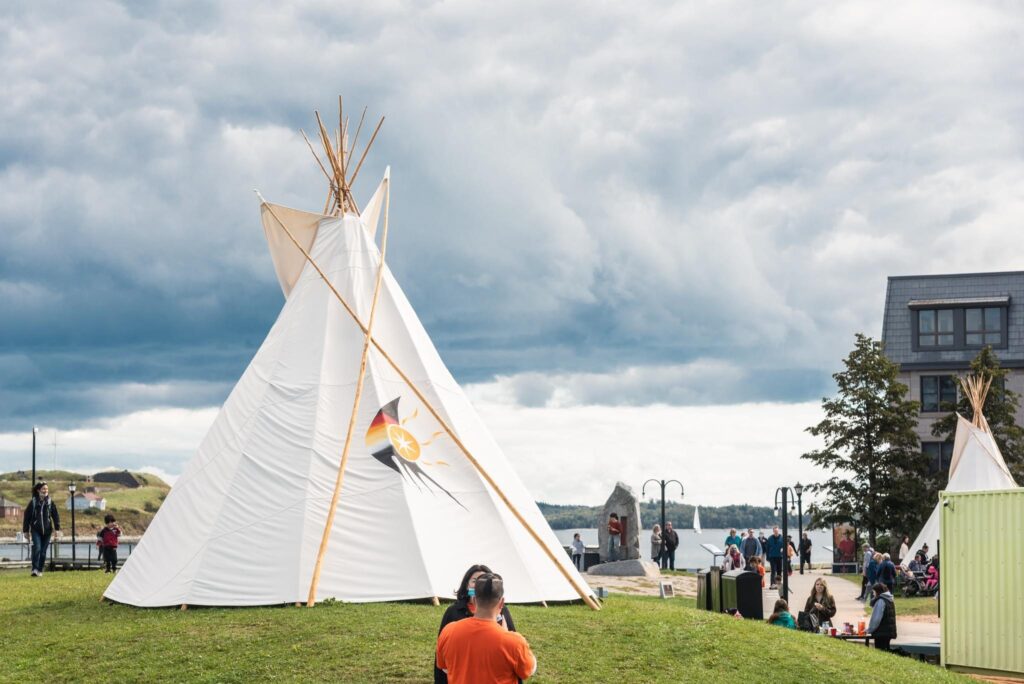
Our EDIRA commitment is grounded first and foremost in an acknowledgement of the lands we work on, including the sacred and enduring relationship that exists between Indigenous Peoples and their traditional territories.
Davis Pier’s offices in Nova Scotia and Prince Edward Island are in Mi’kma’ki, the ancestral and unceded territory of the Mi’kmaq. The Mi’kmaq have been stewards of this land since time immemorial. In this territory, we are all beneficiaries of the Peace and Friendship Treaties signed between the Mi’kmaq and the Crown between 1725 and 1779.
These Treaties did not cede land but outlined relations of peace, trade, and mutual respect between the Mi’kmaq and settlers. Throughout our shared history, these Treaties were not upheld by the British and Canada. Today, as Treaty People, we commit to upholding these agreements and working with the Mi’kmaq to build a better future from the dark and recent past that included genocide.
In the City of Toronto, we live and work on the traditional lands of many nations including the Mississaugas of the Credit, the Anishnabeg, the Chippewa, the Haudenosaunee, and the Wendat peoples that is now home to many diverse First Nations, Inuit, and Métis peoples. Toronto is covered by Treaty 13, signed with the Mississaugas of the Credit, and the Williams Treaties signed with multiple Mississaugas and Chippewa bands.
We hold ourselves accountable to understanding the findings and heeding the 94 Calls to Action of the Truth and Reconciliation Commission of Canada, along with the findings of the National Inquiry into Missing and Murdered Indigenous Women and Girls and Calls to Justice.
Justice Murray Sinclair, the Anishinaabe senator, lawyer, and chair of the Truth and Reconciliation Commission of Canada helped this country understand the hard truths of the residential school system. He put the work of reconciliation succinctly and powerfully:
“The road we travel is equal in importance to the destination we seek. There are no shortcuts. When it comes to truth and reconciliation we are forced to go the distance.”
Through our work, our personal learning, and unlearning we are intentional in our efforts to support reconciliation, decolonization, and access to justice for Indigenous Peoples across this country.
Recognizing the African Nova Scotian experience and cultural contributions
Davis Pier recognizes African Nova Scotians as a distinct founding people who have resided here for more than 400 years. African Nova Scotians’ histories, legacies and contributions continue to enrich the part of Mi’kma’ki that is now known as Nova Scotia. We recognize Nova Scotia as the birthplace of Black culture and heritage in Canada and believe in the ongoing social, cultural, and economic importance of historic Black communities.
We celebrate the strength, resilience, and cultural contributions of African Nova Scotians. Significant work remains to address the legacy of enslavement and segregation as well as the ongoing reality and impacts of systemic anti-Black racism and discrimination. These longstanding realities have served to restrict access to education and employment opportunities, hinder property ownership and land titles, and limit representation and participation in social discourse and policy making.
Acknowledging and addressing racism
Davis Pier acknowledges the historical and ongoing harm caused by racism and white supremacy, both systemic and overt, against Black people, Indigenous people, and People of Colour (BIPOC). We work to embed anti-racism practices in our work and throughout our organization.
We continue to make strides to improve our company’s practices, as we have not always understood the magnitude of this issue. The May 25, 2020, killing of George Floyd and subsequent rise of the Black Lives Matter movement challenged and galvanized the Davis Pier team to reflect deeply and converse meaningfully about race and our collective and individual responsibilities to actively identify and oppose oppression and racism.
We are committed to continuous learning to better understand the history, lived realities, and cultural gifts of Indigenous, Black, and People of Colour, and to unlearning ways in which we have contributed to systemic racism.
Within our community and social impact work, we are active partners on the path toward social justice and equity. We understand we hold a privileged role in advising public policy directions and the design of programs and service. With that comes a responsibility to apply an equity lens to all aspects of our work.
We embed anti-racism practices throughout the Davis Pier organization. This includes, but is not limited to, setting expectations that all team members participate in regular EDIRA sessions, creating space for personal learnings, supporting access to professional development opportunities, providing EDIRA-informed tools and methods, and applying an anti-racist lens in project delivery.
This ongoing effort is essential to addressing and dismantling systemic racism. We believe that critical group and personal reflection, direct action, and accountability form the basis of promoting positive change.
Welcoming workplace for all
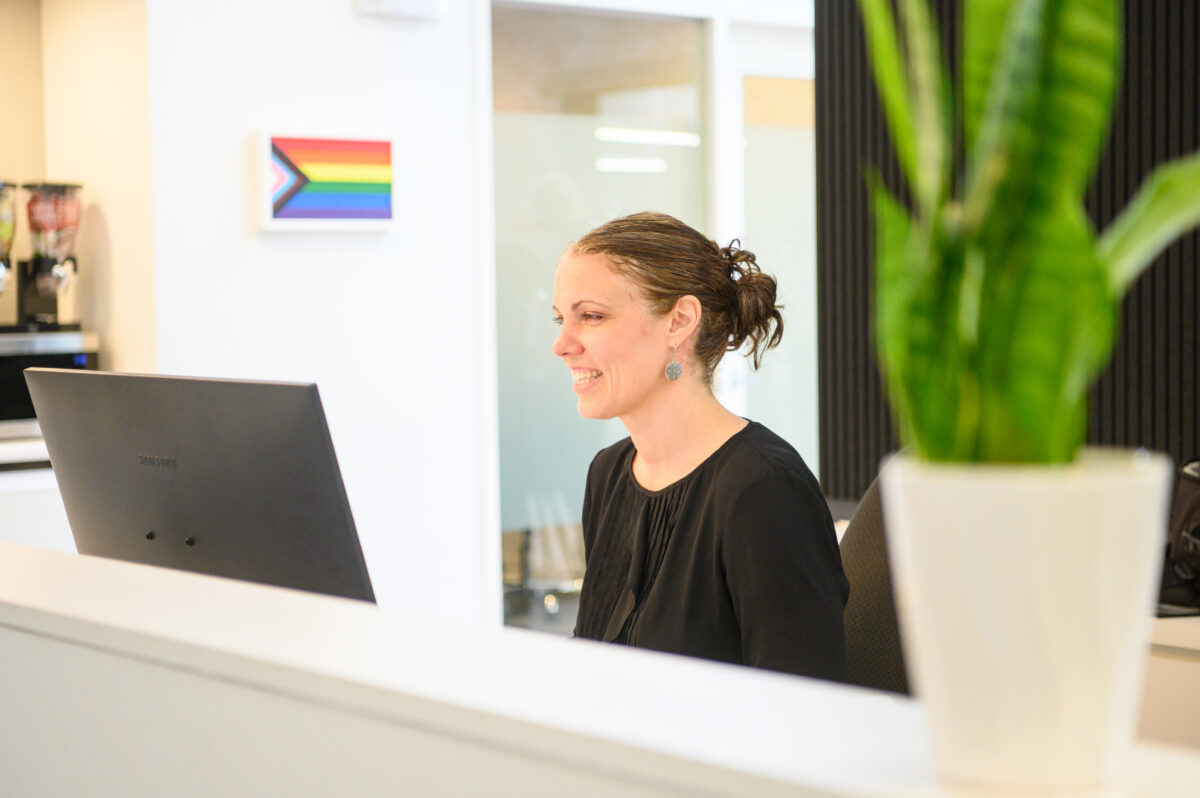
We must also think critically about how other equity deserving groups, such as the 2SLGBTQIA+ community and the neurodiverse and disability community experience our workplace and are impacted by our work.
Everyone deserves to feel safe, respected, fully seen and appreciated for who they are in their workplace and community. We support and affirm employees of all sexual orientations, gender identities and expressions, including trans, non-binary, gender-diverse, and Two-Spirit people. We extend the same respect and affirmation to clients, community members and participants in events and engagements hosted by Davis Pier.
Members of the Davis Pier team are encouraged to express their gender in the way that feels true to them, without question or judgment. This includes using chosen names and pronouns, dressing in a way that reflects their identity, and having access to gender neutral facilities.
Understanding and improving accessibility
The work undertaken by Davis Pier often has profound impacts on people living with accessibility challenges; therefore, we are responsible to learn from and understand these challenges and create equitable opportunities for people of all abilities.
We take action to embed accessibility in every stage of our work—actively listening to lived experiences, identifying and removing barriers to participation (e.g., having an American Sign Language interpreter available), and designing materials and processes (e.g., plain language materials for individual reflection or group discussion) that enable everyone to engage fully and meaningfully.
In our workplace, we aim to offer accommodation and accessibility both individually and systemically. At the same time, we acknowledge our physical workplace is not fully accessible and these physical limitations need to be addressed.
We acknowledge conditions, practices and treatment create barriers to full participation for some individuals and groups. While some barriers are visible, others though unseen, are equally present. Davis Pier is committed to removing barriers for people with disabilities and differing abilities.
Identity and intersectionality
We recognize identity is complex, multi-faceted and deeply personal. People within our workplaces and whom we encounter in our work may be part of many communities, based on their background, beliefs, faith, age, abilities, socio-economic standing, sexual orientation and gender. We recognize and welcome this intersectionality and recognize the myriad ways it shapes how people experience the world.
Living our values
Everyone at Davis Pier shares responsibility for providing a safe, welcoming and harassment-free workplace. Our mission and vision cannot be achieved without an active commitment to anti-racism, decolonization, inclusion, equity, and accessibility. This is consistent with how we define and live Davis Pier’s core values:
- Integrity – We lead with intention, courage, and honesty. We do what’s right, even when it’s hard.
- Collaboration – We work alongside our clients, community, and colleagues, because the best ideas and outcomes happen when we build them together.
- Inclusivity – We make sure every person feels seen, heard, and empowered to shape our work. We make space for voices that make us and our work better.
- Flexibility – We do what it takes to make a difference, guided by open minds, trust, and a nimble approach.
- Impact – We show up, we listen, and we build trust. We know this is the foundation for building lasting outcomes.
- Fun – We work hard, support our people, and foster a culture that values joy, connection, and meaningful moments.
Our EDIRA commitment is a living, evolving statement to be regularly revisited and updated. As we learn and grow our knowledge, understanding, and practice, so too will we deepen our EDIRA commitment and approach. To stay up to date with some of the actions we’re taking tied to our EDIRA commitment, please check out our Community Impact page.

Let’s Talk
If you’ve got an idea for how we can make a difference together, we’d love to hear from you—reach out to our Manager of Operations and Community